
Home Inspection Checklist for Buyers 2026: What to Expect
Editorial Team· Content Writer Sep 13, 2026 15 min read 2,883 words
Table of Contents
What a Home Inspection Checklist for Buyers 2026 Covers
The 8 Systems Every Inspection Report Should Address
Common Home Inspection Red Flags That Kill Deals
Safety Red Flags
Cost Red Flags
The Red Flags Buyers Underestimate
When a Red Flag Becomes a Walk-Away
How Long Does a Home Inspection Take?
What Affects the Timeline
Hiring a Licensed Home Inspector in Alberta
How to Verify an Inspector's Credentials
What the Licence Actually Buys You
The Price Trap
Negotiating Repairs After a Home Inspection
Credit vs. Repair: What to Ask For
Digital Tools and Regional Hazards Buyers Miss
Frequently Asked Questions
Last Updated: Sep 13, 2026
What a Home Inspection Checklist for Buyers 2026 Covers
A home inspection checklist for buyers 2026 is a room-by-room framework that tells you which systems a certified inspector will examine, what each finding means, and how to use the report during negotiations. At Delta Home Inspection Services, we build every inspection around eight core systems, and that structure is what separates a useful report from a stack of photos with no priorities attached.
The distinction matters because a checklist is not the inspection itself. It is the lens you use to read the inspection. Buyers who understand the categories walk into a report knowing which findings are cosmetic and which ones carry real money.
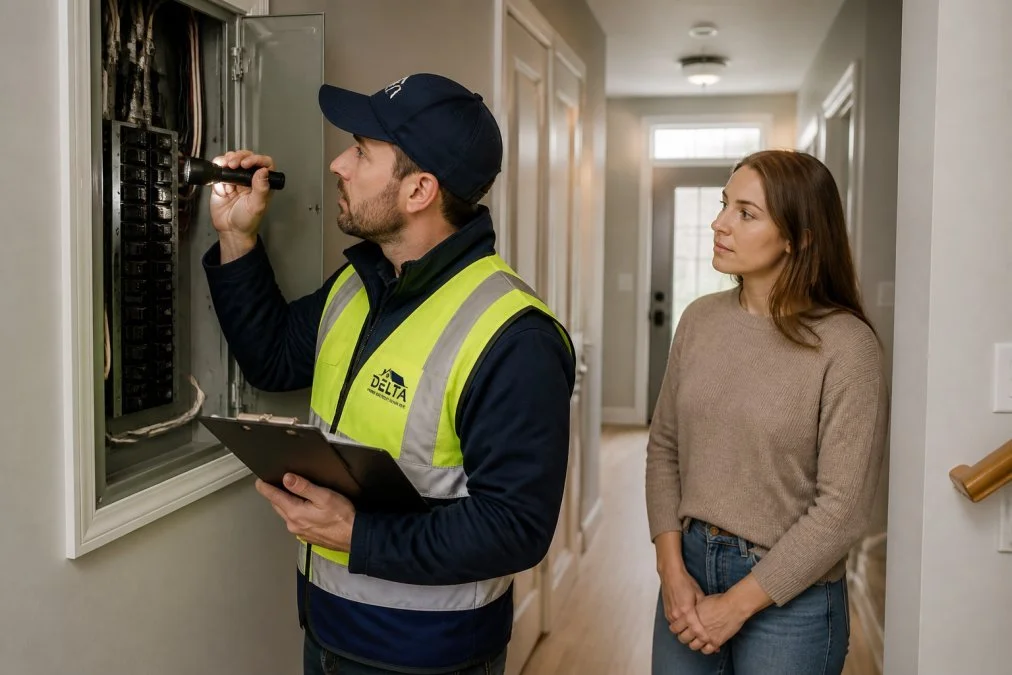
The 8 Systems Every Inspection Report Should Address
A complete inspection covers these areas, and any report missing one of them deserves a follow-up question:
Exterior and grounds, grading, drainage, walkways, and how water moves away from the structure
Foundation and structural integrity, foundation cracks, load-bearing walls, and signs of movement
Roofing and chimney, roof shingles, flashing, and chimney condition
Electrical system, electrical panel, wiring type, and GFCI outlets
Plumbing and water systems, water pressure, supply lines, and the sewer line
HVAC, furnace and air conditioning condition, plus HVAC efficiency and expected HVAC lifespan
Attic, insulation, and ventilation, insulation R-value, attic ventilation, and crawl space condition
Interior, walls, floors, ceilings, window seals, smoke alarms, and carbon monoxide detectors
Most buyers skim straight to the photos. The trade recommendation beside each finding is where the actual information lives.
Common Home Inspection Red Flags That Kill Deals
Red flags are not all the same size. The useful way to read them is by consequence: does this finding threaten your safety, your financing, or your budget? A report that flags a loose handrail and a report that flags a cracked heat exchanger are not the same document, even if both use the word "defect."
Safety Red Flags
These are the findings that can affect whether a lender or insurer will proceed, and they are rarely negotiable on price alone:
Exposed or improperly terminated wiring in the panel, attic, or basement, a fire risk and a common insurance objection.
A recalled or discontinued electrical panel, some insurers decline coverage outright until it is replaced.
Missing or non-functional smoke and carbon monoxide alarms, a legal requirement in most provinces for residential dwellings.
Evidence of carbon monoxide risk from a fuel-burning appliance, such as a cracked heat exchanger, blocked flue, or backdrafting at the water heater.
Asbestos-containing materials in older insulation, floor tile, or pipe wrap. Health Canada's guidance on asbestos in the home explains why suspected material should be tested rather than disturbed.
Radon, invisible, odourless, and only detectable by measurement. Health Canada's radon information for homeowners recommends testing because there is no other way to know the level in a home.
Cost Red Flags
These are the findings that move the price rather than the deal:
Moisture intrusion, staining, efflorescence, or a musty smell in the basement, attic, or around a chimney. A stain is a symptom; the question is whether the source was fixed.
Foundation cracks that suggest ongoing movement, especially cracks that have widened since a prior repair, or stair-step cracking in block foundations.
Roof shingles at the end of their service life, plus failed flashing at valleys, chimneys, and sidewalls.
Plumbing leaks that have run long enough to stain drywall or rot subfloor.
A sewer line with root intrusion, bellies, or a break, often the single largest surprise cost in an older home.
Deferred maintenance on HVAC, a furnace or air conditioner past its expected service life with no service records.
The Red Flags Buyers Underestimate
Three categories consistently get downplayed in reports and then become expensive:
"Monitor this" notes. A foundation crack that has visibly widened since a previous owner's repair is not a maintenance item, it is an unresolved cause. Get a structural opinion before you remove conditions.
Seasonal findings. Ice damming at roof edges, freeze-thaw movement in foundations and driveways, and drainage that fails during spring melt show up as patterns, not single defects. A summer inspection can miss what a winter one would flag.
Materials that were common decades ago and are handled differently now. Asbestos, older insulation products, aluminum branch wiring, and polybutylene supply lines all fall into this group. None of them is automatically a deal-breaker, but each one changes the cost of ownership and the pool of contractors willing to work on it.
Watch OutThe most expensive mistake buyers make is treating a "monitor this" note as a non-issue. If the cause is unresolved, the number in the report is a guess, and guesses get more expensive after closing.
When a Red Flag Becomes a Walk-Away
Not every red flag ends a deal. A red flag becomes a walk-away when the repair cost is unknown, the cause is unresolved, or the fix touches something structural. Foundation movement with no clear cause, a sewer line that needs replacement, and any unresolved moisture problem behind finished walls are the three findings that most often justify stopping. Everything else is a negotiation, and the next section explains how to run that negotiation.
How Long Does a Home Inspection Take?
A home inspection takes two to four hours for a typical single-family home, and the report usually follows within one to two business days. That timeline is standard, not padded. A thorough inspection means the inspector is on the roof, in the attic, at the electrical panel, and under the sinks, and those stops add up.
What Affects the Timeline
Four variables move the clock more than anything else:
Home size, age of home, attic and crawl space access, occupancy.
If you are working inside a tight condition period, tell your inspector before booking. Delta Home Inspection Services delivers interactive reports with photos and video, and turnaround is worth confirming up front rather than assuming.
Hiring a Licensed Home Inspector in Alberta
Hiring a licensed home inspector means verifying credentials before you book, not after the report arrives. In Alberta, home inspectors are regulated, and you can confirm a licence through the provincial regulator rather than taking a website's word for it. The verification sequence takes about ten minutes and is the single highest-leverage thing you can do before you spend money on an inspection.
How to Verify an Inspector's Credentials
Work through these in order, and stop if any answer is vague:
Ask for the licence number in writing, by email, not verbally. A licence number you can look up is worth more than a logo on a website.
Confirm the licence is current through the provincial regulator's public registry. A lapsed or suspended licence is a red flag about the business, not just the paperwork.
Ask which association the inspector belongs to and whether membership is in good standing. Association membership typically requires continuing education and adherence to a standards of practice and code of ethics.
Ask what the report includes, specifically, whether it covers all eight core systems, whether it includes photos and video, and whether it lists a recommended trade for each finding.
Ask about insurance, errors and omissions coverage and general liability. This matters if a dispute arises after closing.
Ask who actually performs the inspection. If the person on the phone is not the person on site, confirm the credentials of the inspector who will attend.
What the Licence Actually Buys You
A licensed inspector's report is written to a published standard of practice rather than to a personal opinion. That distinction has practical consequences:
The report holds up better in a dispute. If a finding was missed or mischaracterized, a report written to a standard is easier to evaluate than a narrative with no framework.
The scope is defined. You know what was inspected and, just as importantly, what was excluded, which is where most post-closing surprises originate.
The recommendations are traceable. A report that names the trade to call (roofer, electrician, structural engineer) is more useful than one that says "further evaluation recommended."
The Price Trap
A common mistake is choosing on price alone. An inspection is one of the few costs in a purchase where a lower fee can mean a shorter report, fewer systems checked, and no trade recommendations. Before you compare quotes, ask each inspector the same five questions: what is covered, what is excluded, how long the inspection takes, when the report is delivered, and whether the inspector will walk you through the findings by phone. A quote that answers all five is comparable. A quote that answers none of them is not a lower price, it is a different product.
Pro TipBook the inspection before your condition period starts, not on the day it begins. If the report raises a question that needs a specialist, a structural engineer, a roofer, an electrician, you want enough calendar days left to get that second opinion and still negotiate.
Delta Home Inspection Services members are Alberta-licensed, NAIT certified. Owner and operator Amr "Amroh" Soliman holds the CPI designation. If you are weighing a property and want to know exactly what the report will cover before you book, ask for the scope in writing, any inspector worth hiring will send it.
Negotiating Repairs After a Home Inspection
Negotiating repairs after a home inspection works best when you separate safety items from cosmetic ones and price each group. Bring the report, the repair estimates, and a clear ask. Sellers respond to specifics far better than to a general request for money off.
Credit vs. Repair: What to Ask For
Choose a credit when the repair is straightforward and you want control over who does the work. Choose a seller repair when the issue affects financing, insurability, or safety compliance, because lenders and insurers often want the fix documented before closing. For anything structural or unresolved, ask for a specialist evaluation rather than a dollar figure, since a guess at repair cost is worse than no number at all.
Pro TipAttach one qualified trade estimate to each item you raise, and cap your list at the three findings that actually move the price. A report with twenty demands reads as a renegotiation. A report with three priced items reads as due diligence.
Digital Tools and Regional Hazards Buyers Miss
Digital tools have changed how buyers use an inspection report. Cloud-based reports let you tag findings, attach your own photos from a second walkthrough, and share a read-only link with your realtor or contractor in one message. Thermal imaging is the other shift worth knowing about, because it can reveal temperature differences behind finished surfaces that a visual check cannot. It supplements an inspection; it does not replace one.
Regional hazards are where generic checklists fall short. In this climate, the hazards that actually drive repair costs are freeze-thaw movement in foundations and driveways, ice damming at roof edges, and drainage systems that fail during spring melt. Each one shows up as a seasonal pattern rather than a single visible defect, which is why a summer inspection can miss what a winter one would flag.
Canada Mortgage and Housing Corporation's homebuying guidance is a useful reference for understanding how moisture, drainage, and seasonal movement interact in a purchase decision.
Buying a home in this market means reading a report under time pressure, and that is exactly where a clear, well-structured inspection pays for itself. Delta Home Inspection Services provides Alberta-licensed, NAIT certified inspections across Edmonton and up to 100 km beyond, with interactive reports that include photos, video, and recommendations on which trade to call for each finding. If you are weighing a property in Spruce Grove, Leduc, or anywhere in between, get a quote from Delta Home Inspection Services and walk into your next negotiation with the full picture.
Frequently Asked Questions
What is the biggest red flag in a home inspection?
Foundation cracks that suggest structural movement, moisture intrusion in the basement or crawl space, and a roof that needs full replacement are among the most serious findings. In older homes, asbestos and outdated wiring also raise concern. These issues can cost tens of thousands to fix, so they often become negotiation points or reasons to walk away. A qualified inspector will flag these clearly in the report so you know what is critical versus cosmetic.
How long does a home inspection take for an average house?
A standard single-family home inspection takes two to three hours on site. Larger properties or homes with crawl spaces, multiple furnaces, or significant deferred maintenance can take four hours or more. The inspector then needs time to compile the report, which is usually delivered within 24 to 48 hours. If you are working within a tight offer condition deadline, ask about turnaround time before you book.
Can a seller refuse to fix issues found in a home inspection?
Yes. A home inspection is not a repair order. The seller can decline to fix anything. What you do with that information is your choice: you can renegotiate the price, ask for a credit at closing, request specific repairs as a condition of sale, or walk away if your offer included an inspection condition. Having a clear inspection report gives you the evidence you need to negotiate from a position of knowledge rather than guesswork.
What are the most common home inspection fails?
The most frequent findings include roof shingles at or near end of life, poor drainage systems that direct water toward the foundation, insufficient attic insulation or ventilation, aging HVAC equipment past its expected lifespan, plumbing leaks under sinks, and missing or non-functional GFCI outlets near water sources. None of these automatically sink a deal, but they give you a realistic picture of upcoming maintenance costs and a basis for negotiating repairs after the home inspection.
How do I interpret a professional inspection report?
Start with the summary section, which highlights the most significant issues. Then read each system section to understand the inspector's reasoning. Look for language that distinguishes safety concerns from maintenance items. A good report includes photos and videos, plus recommendations for which trade professional to contact. If anything is unclear, call your inspector. A thorough report should leave you confident about what you are buying, not confused.
What is the difference between a home inspection and a home appraisal?
A home inspection evaluates the physical condition of the property: structure, roof, electrical, plumbing, HVAC, and other systems. A home appraisal determines market value for lending purposes. They serve different functions. Your lender requires an appraisal. You should request an inspection to understand what you are actually buying. Both matter, but only the inspection tells you whether the furnace is about to fail or the foundation has moisture problems.
